Official ticket, booked in your name
Pick your Machu Picchu date, any day through October 2027
Choose the route, the day and the entry hour. We buy the Ministry ticket in your name and email it to you. From $62 per adult.
Month by month (average high / low, rain)
- January: 21 °C / 12 °C, 341 mm of rain — one of the three wettest
- February: 21 °C / 12 °C, 325 mm of rain — Inca Trail closed all month
- March: 21 °C / 12 °C, 341 mm of rain — one of the three wettest
- April: 22 °C / 12 °C, 184 mm of rain — transition, rain easing
- May: 22 °C / 11 °C, 73 mm of rain — dry season begins
- June: 22 °C / 10 °C, 51 mm of rain — driest month
- July: 22 °C / 9 °C, 54 mm of rain — coolest nights
- August: 23 °C / 10 °C, 61 mm of rain
- September: 23 °C / 11 °C, 76 mm of rain — warmest days
- October: 23 °C / 12 °C, 163 mm of rain — transition, rain returning
- November: 23 °C / 12 °C, 173 mm of rain
- December: 21 °C / 12 °C, 275 mm of rain
Figures are SENAMHI's 1991–2020 normals for its Machu Picchu station, rounded. SERNANP, which manages the sanctuary, gives November to March as the rainy season. Recent seasons have tended to start and end later, so treat April and October as months that can go either way.
Dry season (May–September)
From May to September each month gets between about 51 and 76 mm of rain, against more than 320 mm in each of January, February and March. Days hold at 22 to 23 °C and nights at the station drop to 9 to 11 °C, coolest in June and July; in Cusco it is near freezing before dawn. Mornings are clear, the sun is strong by midday and the views from the platforms and the summits are the best of the year.
Clear skies are also why most people come now. July and August were the two fullest months of 2025, and this is the season for the summits: book Huayna Picchu and the Mountain first. Among the city routes, 2A sells out first and 2B usually has dates when 2A is gone. The official dates and capacity are in high season and holidays.
Rainy season (November–March)
Rain builds from about 173 mm in November and 275 mm in December to more than 320 mm in each of January, February and March. Expect showers most afternoons and cloud sitting on the peaks at dawn that usually lifts by mid-morning, so mornings tend to be the drier half of the day. Temperatures barely change: about 21 to 23 °C by day and 12 °C at night, milder nights than in the dry season.
The rains bring the greenest terraces of the year and the fewest visitors; outside holidays the daily capacity of 4,500 is rarely reached. The cost is underfoot: Huayna Picchu and the Mountain climb on stone steps that get slippery when wet, and the trails can close on days of heavy rain. In these months a 2 h 30 route like 2A is the safer bet, and a morning entry makes the most of the drier hours; the trade-offs of each slot are in the best time of day to visit.
January
January averages 21 °C by day and 12 °C at night with 341 mm of rain, tied with March as the wettest month in SENAMHI's normals. Showers come most afternoons, so plan the visit for the morning. 1 January is a high-season date; from the 2nd the month is low season, and the trains run the January–April schedule, with departures from Cusco by bus plus train. Crowds, holidays and the ticket to book: Machu Picchu in January.
February
February is just as warm and wet: 21 °C / 12 °C and 325 mm of rain. The Inca Trail closes all month for maintenance and reopens on 1 March, but Machu Picchu stays open and you arrive by train. The whole month is low season, so tickets are easy to get; the wet stone steps are the reason to choose a city route over the summits. Crowds, holidays and the ticket to book: Machu Picchu in February.
March
March matches January as the wettest month, with 341 mm, and the same 21 °C / 12 °C. It is still low season, with one exception in 2027: Easter falls on 28 March, so Holy Thursday and Good Friday (25 and 26 March) bring a long weekend of Peruvian travel. Book those days as if they were high season. Crowds, holidays and the ticket to book: Machu Picchu in March.
April
April is the transition out of the rains: 184 mm, about half of March, with 22 °C days and 12 °C nights. Showers thin out week by week and the terraces are still green, though in recent years the rains have ended later, so the first half can still be wet. The trains keep the January–April schedule until the end of the month. Crowds, holidays and the ticket to book: Machu Picchu in April.
May
The dry season begins: rain drops to 73 mm, days stay at 22 °C and nights fall to 11 °C. May brings dry weather without the high-season crowds; on the Ministry's 2026 calendar, high season started only on 19 June. 1 May is a public holiday and Cusco's Corpus Christi falls on 27 May in 2027. From May, PeruRail runs direct trains from Cusco again. Crowds, holidays and the ticket to book: Machu Picchu in May.
June
June is the driest month, with 51 mm of rain, 22 °C days and 10 °C nights at the station; before dawn in Cusco it is near freezing. On the 2026 calendar high season began on 19 June, Inti Raymi fills Cusco on the 24th and 29 June is a public holiday, so the last ten days are among the fullest of the year. If you are going for the festival, see Inti Raymi 2027. Crowds, holidays and the ticket to book: Machu Picchu in June.
July
July has the coolest nights, about 9 °C, with 22 °C days and 54 mm of rain. It was also the fullest month of 2025, with 156,680 visitors, and Fiestas Patrias on 28 and 29 July add a long weekend of Peruvian travel. Huayna Picchu goes four months ahead or more; the afternoon entries on 1B, 2A, 2B and 3B are the last to sell out. Crowds, holidays and the ticket to book: Machu Picchu in July.
August
August warms to 23 °C by day, with 10 °C nights and 61 mm of rain. It was the second-fullest month of 2025 (153,655 visitors), with public holidays on 6 and 30 August. If your date is gone everywhere, the 2-Day Tour takes you to the Ministry's in-person sale in the Pueblo. Crowds, holidays and the ticket to book: Machu Picchu in August.
September
September has the warmest days, 23 °C, with 11 °C nights and 76 mm of rain, still dry. It remains high season on the Ministry's calendar, but the international peak eases after the first week: the same clear skies with noticeably more room. With May, it is the best balance of weather and crowds. Crowds, holidays and the ticket to book: Machu Picchu in September.
October
October is the transition into the rains: 163 mm, about double September, with 23 °C days and 12 °C nights. Afternoon showers return while mornings stay mostly clear, and recent years have started the rains later. High season runs to 2 November; October 2025 was the third-fullest month (149,977 visitors), helped by the 8 October holiday. Crowds, holidays and the ticket to book: Machu Picchu in October.
November
November brings 173 mm of rain with 23 °C days and 12 °C nights, and SERNANP counts it as the start of the rainy season. High season ends on 2 November; from the 3rd the capacity drops to 4,500 and the month is quiet. Quiet does not mean last-minute tickets: in 2026 November had no Circuit 2 left by mid-October. If your date is sold out, see what to do when Machu Picchu is sold out or the 2-Day Tour. Crowds, holidays and the ticket to book: Machu Picchu in November.
December
December is wetter again, with 275 mm, and a little cooler by day at 21 °C, with 12 °C nights. It is quiet until mid-month, then Christmas and New Year fill Cusco; 8 and 9 December are public holidays, and 30 and 31 December are high-season dates with 5,600 capacity. Crowds, holidays and the ticket to book: Machu Picchu in December.
What to pack for Machu Picchu weather
Pack for two climates in one morning. At the bus stop at dawn it is 5 to 12 °C; by 11:00 the terraces are at 20 to 25 °C in full sun with almost no shade. Three thin layers do the job better than one thick coat.
- A rain jacket with a hood, all year: Umbrellas are on the prohibited list in any size, and the cloud forest rains in any month. From November to March take a real jacket; the plastic ponchos sold at the station tear fast.
- Shoes with grip: The routes are stone stairs, often wet and without rails. Trail shoes or worn-in walking shoes; no sandals or smooth-soled trainers.
- Sun protection: Hat, sunscreen and sunglasses in every season: the sun is strong at this altitude, even between showers.
- By season: Dry months: a fleece for the early start and lip balm for the dry air. Rainy months: a dry T-shirt in a plastic bag and a cover for the daypack.
The full list, with what is not allowed through the gate, is in what to wear and pack for Machu Picchu.
Best time to visit Machu Picchu for the weather
- Driest skies: June to August: June and July are the driest months and the views are at their best, but these are also the fullest months of the year. Go if your dates are fixed, and book the entry months ahead.
- Best balance: May and September: Dry weather, milder nights than June and July, and noticeably more room. If your dates can move, these give the same skies with fewer people.
- Fewest people: January to March: Afternoon rain, the greenest terraces and easy tickets. Book a city route and enter in the morning.
- April and October: The transition months can go wet or dry depending on the year. Take the rain jacket and keep the plan flexible.
These are long-term averages, not a forecast: for the days you travel, check SENAMHI's official forecast, which lists Machu Picchu among its Cusco locations. Then pick your route and date on the Machu Picchu tickets page.
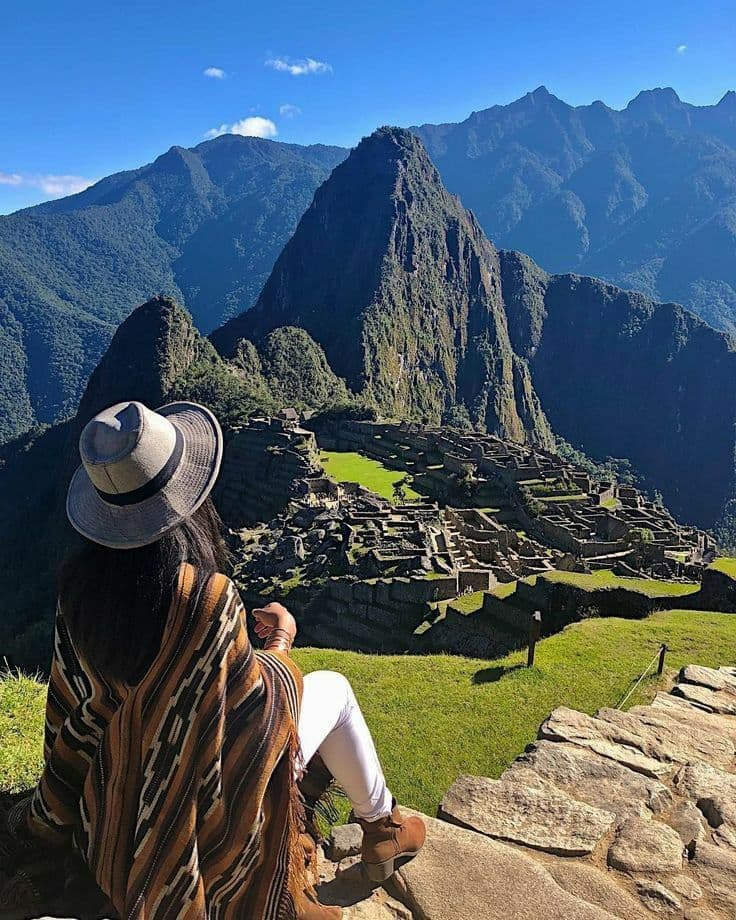
Circuit 2A Classic
The iconic postcard photo of Machu Picchu
What is the best month to visit Machu Picchu?
For dry weather, May to September, with June and July the driest. May and September combine dry weather with milder nights than June and July.
What is the rainiest month at Machu Picchu?
January, February and March are almost tied, each with over 320 mm on average in SENAMHI's 1991–2020 normals.
Is Machu Picchu open in February?
Yes. The citadel is open; only the Inca Trail closes in February for maintenance.
Pick your route, then your date
Every ticket page shows real availability by entry time for the next months. Choose the route first; the dates that are left are right there.
Find another guide
Read next
All 95 guides →