Official ticket, booked in your name
Pick your Machu Picchu date, any day through October 2027
Choose the route, the day and the entry hour. We buy the Ministry ticket in your name and email it to you. From $62 per adult.
Machu Picchu timeline
| When | What happened |
|---|---|
| About 1420 | Earliest burials dated at the site: the estate is already in use |
| 1438 onwards | Pachacuti rules and expands the Inca state from Cusco |
| 1532 | The Spanish capture the Inca Atahualpa in Cajamarca |
| About 1530s | The estate is left; the Spanish never record it |
| 1902 | Agustín Lizárraga writes his name in charcoal on a wall |
| 24 July 1911 | Hiram Bingham reaches the site, guided by farmer Melchor Arteaga |
| 1912–1915 | Yale excavations; thousands of objects go to the United States |
| 1983 | UNESCO lists the Historic Sanctuary as cultural and natural World Heritage |
| 2011 | Yale starts returning the collection to Peru (Casa Concha, Cusco) |
| 2027 | Daily cap of 4,500 visitors, 5,600 on 147 high-demand days |
Who built Machu Picchu, and what it was for
Machu Picchu was built by the Incas as a royal estate of Pachacuti, the ruler who turned the kingdom of Cusco into an empire in the 15th century. It was not a fortress or a capital: it was a country palace, with residences for the ruler's family, temples, terraces to feed the household and a few hundred people to run it. The granite came from a quarry inside the site, and the buildings that mattered most were cut and fitted without mortar.
In 2021 a team led by Yale archaeologist Richard Burger radiocarbon-dated the remains of 26 people buried at the site. The results put its use from about 1420 to about 1530, some twenty years before the date historians had taken from colonial chronicles. The estate was lived in for roughly a century.
The buildings of that story, and the route that passes them
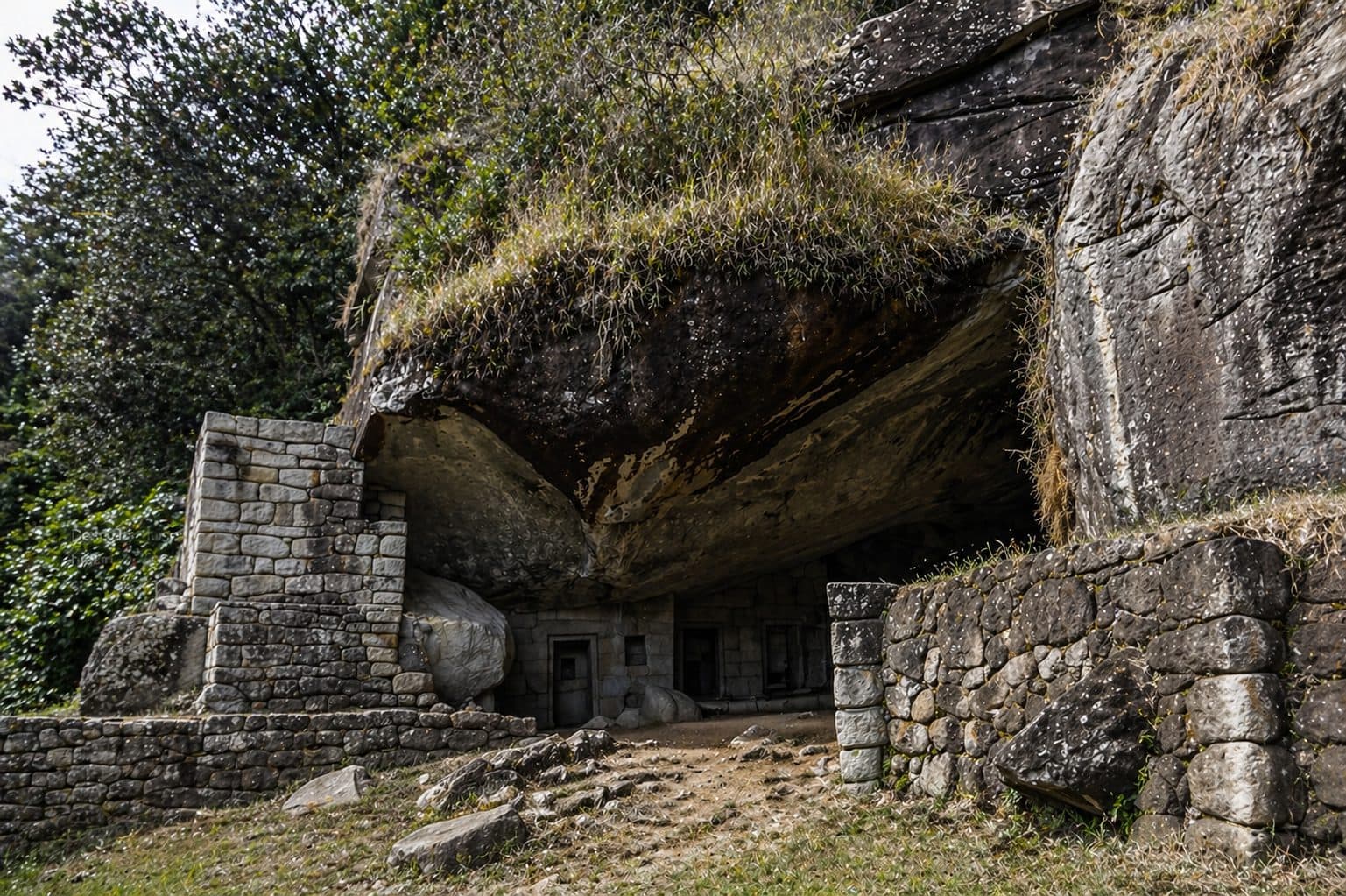
- Temple of the Sun: The only curved building in the city, raised over a natural cave and aligned with the June solstice sunrise. Seen from the official viewpoint on routes 2A, 2B and Circuit 3. Temple of the Sun.
- Temple of the Three Windows and the Sacred Plaza: The ceremonial heart of the estate, with the finest stonework on the site. On Circuit 2. Temple of the Three Windows.
- Intihuatana: A carved granite stone on the highest point of the city, linked to the sun and the calendar. On Circuit 2. Intihuatana.
- Temple of the Condor: Natural rock shaped into the outline of a condor, in the lower east side of the city. On Circuit 2 and Circuit 3. Temple of the Condor.
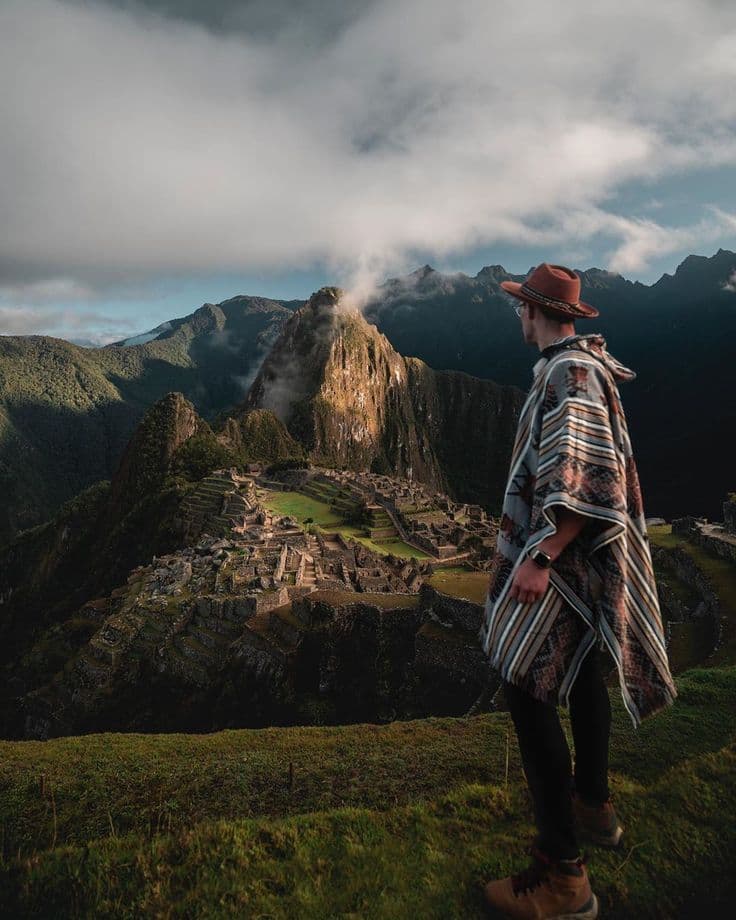
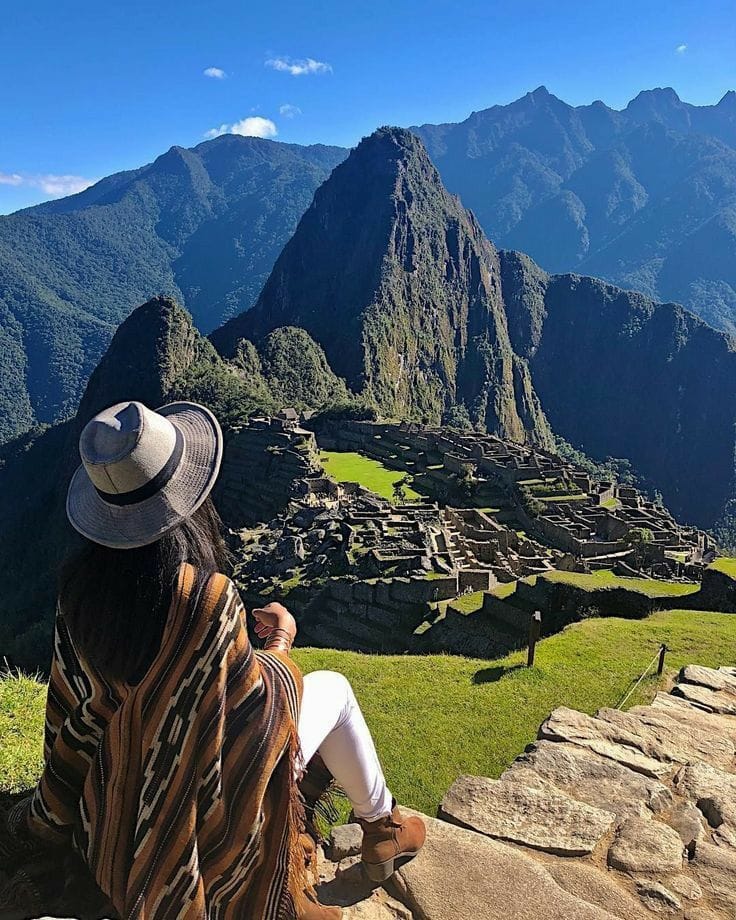
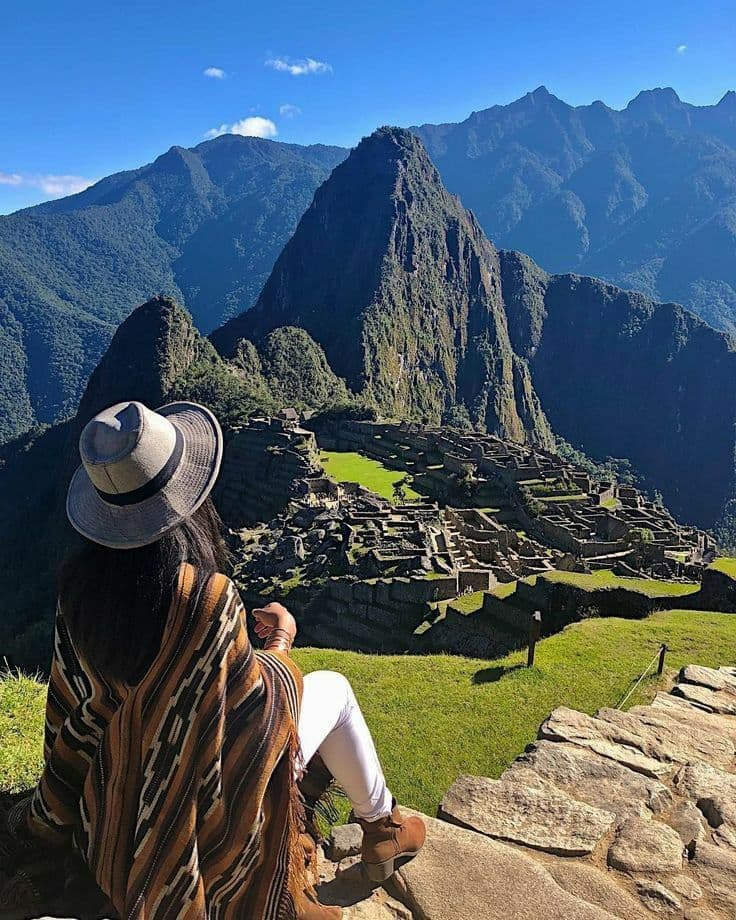
Circuit 2 is the only circuit that walks both the upper temples and the lower sector, so it is the one for a visit about history. Route 2A also starts at the platform where the classic photo is taken. What each route covers: Machu Picchu Circuit 2.
Circuit 2A Classic
The iconic postcard photo of Machu Picchu
Why Machu Picchu was abandoned
A royal estate lived on the ruler's court and his lineage. In the 1520s and 1530s that system collapsed: European diseases reached the Andes before the Spanish did, a civil war split the empire between Huáscar and Atahualpa, and in 1532 the Spanish captured Atahualpa. With the court gone, nobody was left to keep a palace on a remote ridge. The burials stop around 1530.
The Spanish never reached it, or never wrote it down. That is the reason it survived: no church was built over its temples and its stones were not taken for colonial buildings, as happened in Cusco.
1911: who "discovered" Machu Picchu
Nobody discovered it in the sense of finding something unknown. Families were farming its terraces when Hiram Bingham, a Yale lecturer, arrived on 24 July 1911, led up the slope by Melchor Arteaga, a farmer from the valley below. On a wall he found a name written in charcoal: Agustín Lizárraga, a local tenant farmer, with the year 1902. What Bingham did was make it known: the Yale excavations of 1912 to 1915 and a whole issue of National Geographic in 1913 put Machu Picchu in front of the world.
Thousands of objects from those excavations went to Yale. After years of dispute, Yale began returning the collection to Peru in 2011; it is shown in Cusco at the Casa Concha museum.
What the name means
Machu Picchu means "old peak" in Quechua, the name of the mountain above the site; Huayna Picchu means "young peak". A 2021 study of colonial documents by historian Donato Amado Gonzales and archaeologist Brian Bauer suggests the Incas themselves probably called the place Huayna Picchu, or simply Picchu, and that the current name came with the maps of 1911.
Machu Picchu today
UNESCO listed the Historic Sanctuary of Machu Picchu in 1983, for both its Inca architecture and its cloud forest, and in 2007 it was voted one of the New Seven Wonders of the World. Peru's Ministry of Culture runs the site with timed entries and one-way routes; for 2027 the daily cap is 4,500 visitors, rising to 5,600 on 147 high-demand days. The 2027 rules.
Who built Machu Picchu?
The Incas, as a royal estate of the ruler Pachacuti in the 15th century. Radiocarbon dates put it in use from about 1420 to about 1530.
Why was Machu Picchu abandoned?
Its court disappeared in the 1530s, between epidemics, the Inca civil war and the Spanish conquest. Nobody was left to keep a royal estate on a remote ridge.
Who discovered Machu Picchu?
Local farmers always knew it. Hiram Bingham reached it on 24 July 1911, guided by Melchor Arteaga, and made it known worldwide.
How old is Machu Picchu?
About 600 years. It was in use from about 1420, according to radiocarbon dates published in 2021.
Did the Spanish find Machu Picchu?
There is no record that they did. That is why its temples were not destroyed or built over.
Which ticket shows the most of Machu Picchu's history?
Circuit 2 (routes 2A and 2B): it is the only circuit that walks both the upper temples and the lower sector, including the Temple of the Sun viewpoint, the Three Windows and the Intihuatana.
Walk the temples of this story
Circuit 2 passes the Temple of the Sun, the Three Windows, the Intihuatana and the Condor. Live availability for every entry hour, official tickets in your name.
Find another guide
Read next
All 95 guides →